
Author: Osman Zukić | Photographer: Almir Kljuno
According to the statistical data provided by hunting organizations and forest estates, one thousand and seven hundred wolves live in the forests of Bosnia and Herzegovina. Igor Trbojević, a Doctor of Environmental Sciences from Banja Luka, believes that the number is half that. Even if the number is accurate, he says, it is not significant and all the analyses, which are done according to the IUCN criteria, indicate that wolves are an endangered species and that they need to be protected urgently.
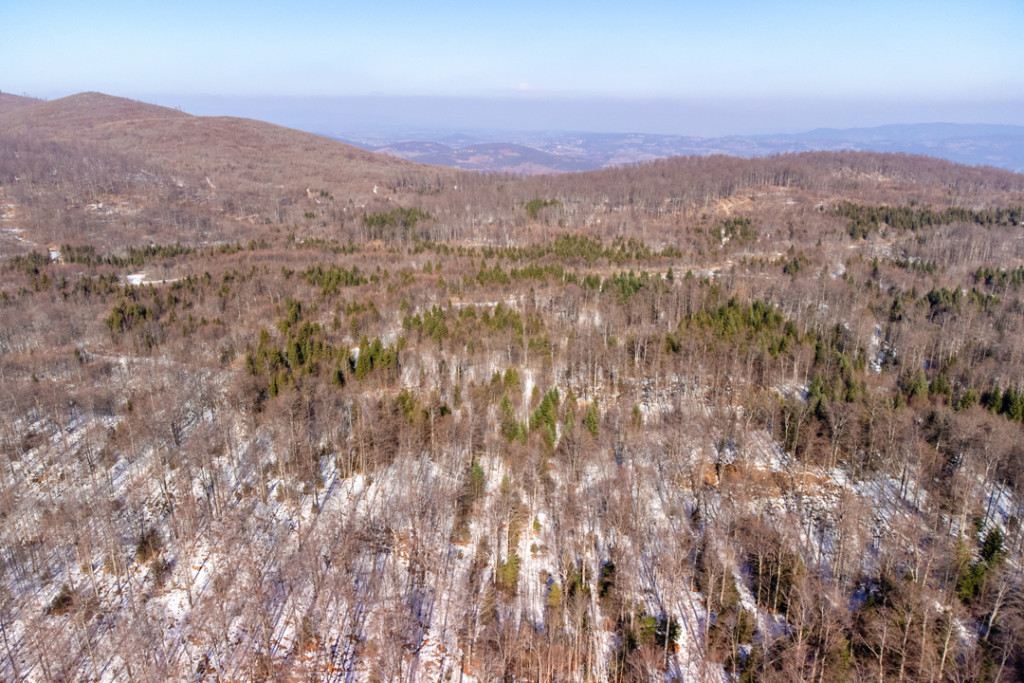
As the northern antechamber of the Dinaric massif, Manjača has always been an important habitat for wolves in Bosnia and Herzegovina. In addition to the geographical position, terrain configuration and altitude, the amount of prey that hide in these hills has also contributed to this. The deeper we go into the forest, the greater the snow deposits. These are the best conditions to follow wolves because fresh tracks are easily found.
Igor has been studying wolves for twenty years, having started as a biology student. Later on, during his doctoral studies, his interest extended to two other large animals – the lynx and the bear. He says that there used to be many wolves here.
Population and vulnerability
A species population size is only one of the aspects of studying the ecology of a species. Based on the number of individual animals, relevant ministries should create management strategies for that particular species. In addition to the number of individuals, the population health, mortality of the young, gender balance, etc., are studied.
Scientists wonder how relevant the data provided by hunters is, given that when counting a population, they use old and unreliable methods. It is in their interest that the numbers are as large as possible. The amount of culled game is given as an indicator, but this number is not always proportional to the number of individuals counted.
“Whether we use scientific or hunting data, Igor says, we still come to the conclusion that wolves are an endangered species. The problem is that wolves are not treated as an endangered species. In the Federation of Bosnia and Herzegovina, wolves are partially protected - females with young are protected - while males are not. Such protection does not ensure the satisfactory size of the wolf population."
On the other hand, in Republika Srpska, they are not protected at all and hunting wolves is completely legal. Often dozens of hunters chase a wolf, which is then met by an even larger number of hunters in hideouts.
Wolves are treated as predators.
Igor says that, notwithstanding the laws treating wolves differently, the effect is the same – whatever the case, there are fewer and fewer wolves.
”You can’t study them in such limited area that is covered by entity laws. Wolves occupy larger territories and even several countries must join forces for a satisfactory study. He mentions the Vlašić Mountain as a case in point. One part of the mountain belongs to one entity, and another part to the other entity, while for wolves, it is one habitat. "How do you tell a wolf, don't go there, that’s Republika Srpska, or don’t go over there, that’s the Federation. It's a political issue, imposed by people, which doesn't exist in nature."
Human-Wolf Interaction
Wolves have always threatened flocks of small livestock. Shepherds took their cattle from one mountain pasture to another, trusting that the wolves would be driven away from their flocks by large sheepdogs. Thus, tornjak, sarplaninac, and other large sheep dogs were bred in the mountains of the Dinaric Massif. As a beast that attacks in a pack and is able to choke a dozen sheep at a time, including dogs, people have hated wolves since ancient times. The hunting season is open perpetually when wolves are in question.
Since wolves are not fully protected and are not officially considered an endangered species, the state is not obliged to pay compensation for the damage they cause. The laws require the owners to protect their property, but do not specify how.
“People think they have solved their problem when they take justice into their own hands and kill a wolf.” However, Igor says that this is not the case. "Animals migrate and another one will come in its place. If the owner doesn’t protect his property, the same thing will happen again."
He believes that the state should do more for cattle owners. It must offer them protection, ensure compensation for damages and explain how they can adequately protect their property.
Not only from wolves, but from bears as well.
“Even if he kills a wolf, the owner will not always be liable." In the Federation, he could be prosecuted, but we have not found any evidence that people were held accountable for such things. After all, whoever kills a wolf won't even report it."
Recent addition in both BiH entities are large animals response teams. They help people secure flocks and apiaries and respond when wild animals repeatedly go into certain populated areas. They comprise both hunters and scientists, and they were formed with the aim of reducing the number of undesirable consequences resulting from the interaction of humans and large animals.
Studying large animals
Studying wolves requires commitment, field work and days of absence from home. Their movements are monitored day and night. Camera traps are placed in their path, which helps ascertain the number of wolves, but also the number of prey - roe deer, wild boar, hare.
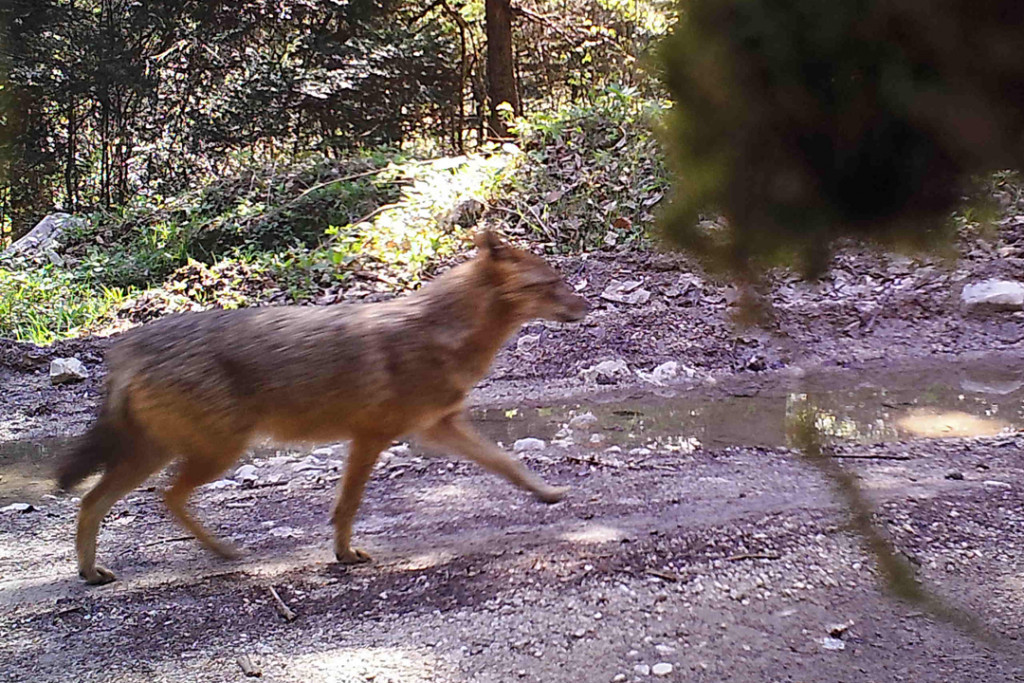
”Igor describes wolves as very wary and cautious animals. It is difficult to track them, to study them more closely. "They always run. The pictures cameras take are usually blurry because wolves are in motion. It's rare to get clear shots. When you get a clear shot, that's something major, but even when they're not clear, that's good enough for us."
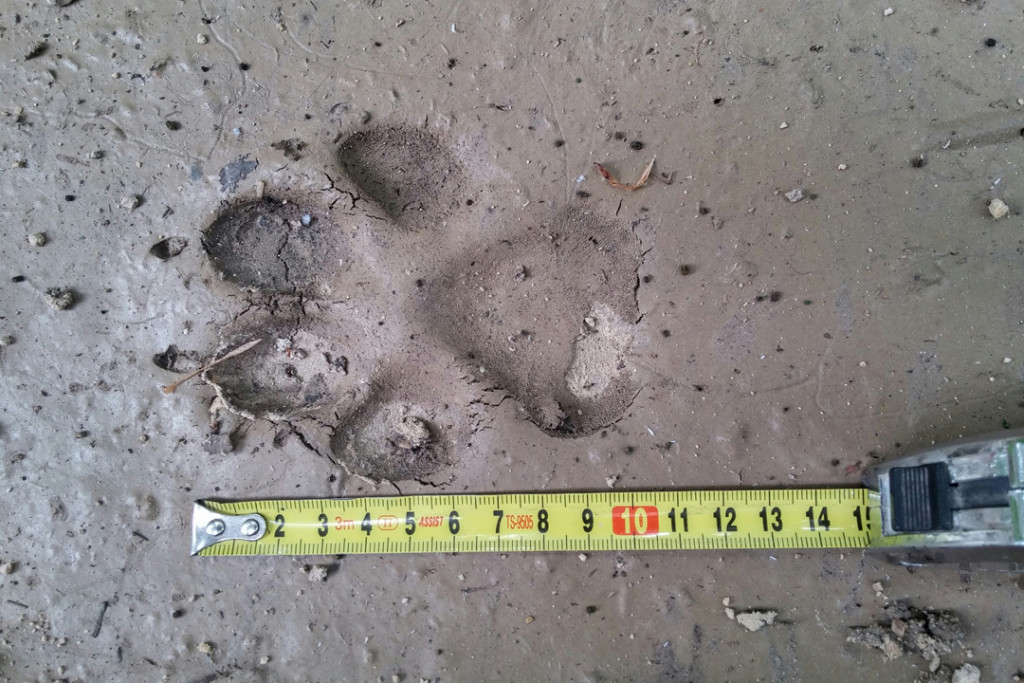
The batteries in cameras don’t last long. Whenever they are replaced, the memory cards are also replaced. After inspecting the grounds, I check the pictures. I am happy like a little child when I see that the camera caught a wolf, says Igor, as if someone gave me a thousand euros.
GPS collars are used when a more comprehensive survey of wild animals needs to be done or for mapping their movements. First, you need to trap the animal, put it to sleep and then release it into nature with a collar. After being put to sleep, wolves wake up on their own, while bears need to be given an injection to wake up from anaesthesia.
Igor recounts some of his experiences.
Once he went to Manjača to check a trap he had set. When he got there, he saw a trapped wolf. It was wounded by a small-calibre gun. We were standing on the spot where he had parked his car at the time, and he showed us from which direction he brought the wounded animal. He put the wolf in his car and took it to the emergency veterinary practice. He says that he never got down from the mountain to the city that fast, and that he still doesn't understand how he managed it. Vets intervened; they shaved the hair where the wolf was hit, performed a surgery, cleaned and stitched the wound.
A little after midnight, the animal died.
“Those are horrible things, he says, and they are the hardest for scientists." We put a lot of effort, time and energy into catching a wolf and collaring it so we can get more information about it and its pack, and then someone shoots it."
Jackal as a top predator
“Hunting organizations and relevant ministries don’t trust science and scientists." Awareness and understanding of people are at a very low level. Science cannot reach every person. You have to be interested in such things. But it can certainly reach hunters; it can certainly can and must be a factor in decision-making institutions, such as are our relevant ministries. But they don’t consult experts enough. I think that we all failed, both sides."
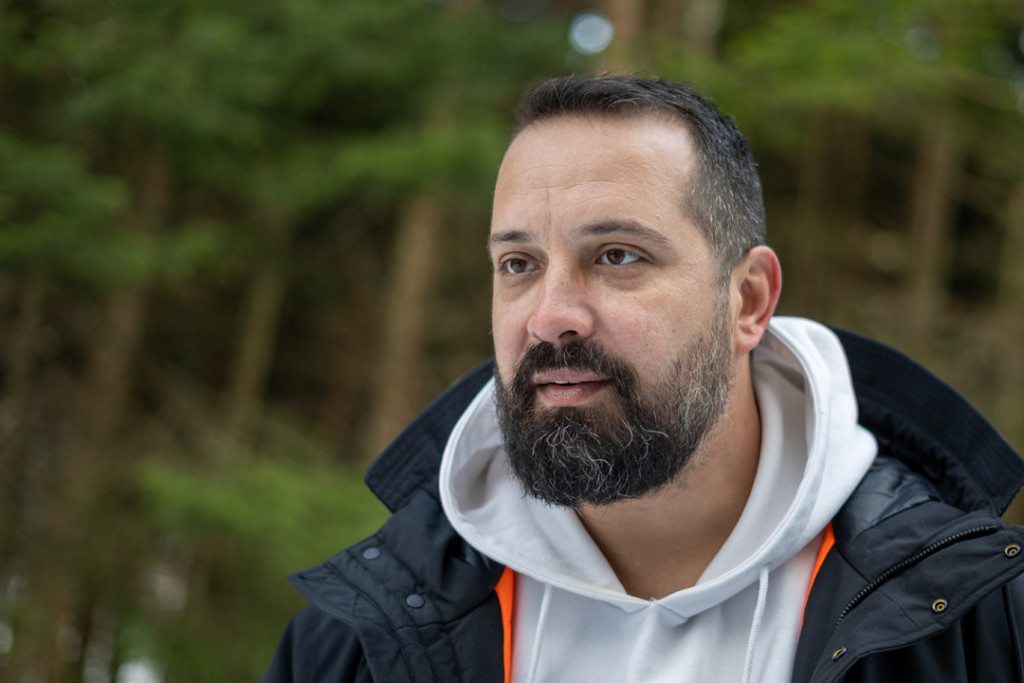
Talking about the bear population, Igor believes that the situation is better. Hunting bears is prohibited and therefore they are less endangered. They are easier to study and there is more information about them. On the other hand, the number of lynxes is at the critical level. He studied them in the forests of central Bosnia and on Zelengora.
According to his data, about fifty lynxes inhabit the mountains of Bosnia and Herzegovina.
As there are fewer wolves, jackals appear more and more in the northern part of Bosnia and Herzegovina. They are smaller, but there are more of them in a pack, and they go into populated areas more often. Compared to wolves, they do more damage to the cattle farmers. They act as a top predator, endanger foxes, and affect the food chain.
We spent two days in Manjača, walking along forest roads and looking for wolf tracks. There were none in the snow. I ask if it is because of hunters. Maybe they are scared? The answer I got was not encouraging at all.
There are no tracks because there are no wolves.
Eco-system regulator
Highways also affect the size of wolf population in BiH. There are no green bridges built over them, corridors that wild animals use when looking for food, habitat, and shelter, as in other European countries. Apart from limited habitats leading to limited access to food, this also causes reduced gene flow, and inbreeding. As a result, the population is rapidly weakening.
In one camera-trap picture, we saw a smaller wolf, of darker colour with a smaller-size head. It was established that a she-wolf mated with a dog. He was accepted into the pack and his behaviour is the same as that of other wolves.
“On one occasion, the president of a hunting organization complained to Igor saying that the members shot over fifty deer that season and none of them were trophy level. The reason is simple, there were no wolves in the hunting ground, because when there are, they choose weak and underdeveloped roe deer, and only the mature and strong ones survive. "I advised them not to hunt for wolves and to let them settle in the hunting grounds. That in that case they would not shoot fifty deer, but only ten, and all ten will be trophy deer."
It seems that the number of wolves will keep on declining until they are fully protected. Those who warn about it consistently are aware of how endangered the entire eco-system is if the top predator is endangered.
We are basically to blame for everything, concludes Igor, the burden is on us, and we should act accordingly, because the more we take from nature, the worse it gets for us. We see the proof of that every day.